
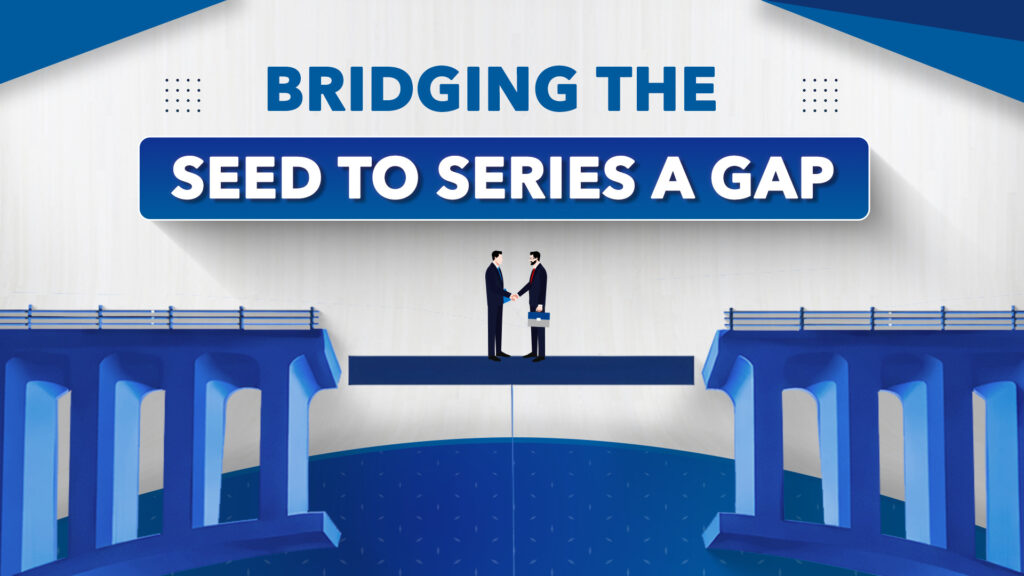
The seed stage is about belief. Series A is about proof. And between the two lies the most fragile phase of a startup’s journey: the Seed-to-Series A gap. This is where many companies stall, not because the idea is flawed, but because traction fails to translate into investor conviction.
In today’s US venture market, Series A is a validation round. Investors are underwriting execution, repeatability, and scale. To cross this gap, founders must demonstrate readiness across three dimensions: Metrics, Momentum, and Maturity.
Today, we are sharing a framework that breaks down what Series A readiness actually looks like and how Seed-stage founders can work backward to get there.
Metrics: Proving the Business Works
By the time you’re raising a Series A, metrics stop being optional. Investors are no longer driven solely by vision or the story. They want to check whether the numbers back the vision.
For most US SaaS and tech-enabled startups, Series A companies usually fall into a familiar range. Annual recurring revenue often sits between $1M and $3M, which roughly translates to $80K to $250K in monthly recurring revenue. Growth matters as much as the revenue. Investors want to see revenue moving steadily upward, not jumping around quarter to quarter.
Investors also zero in on unit economics. They want to understand margins, customer acquisition costs, and the time required to recoup that investment. You don’t need perfect numbers at this stage, but you do need a clear handle on them. Founders who can explain why their CAC looks the way it does, or how margins are expected to improve, come across as far more credible than those who quote benchmarks.
Momentum: Is It Moving in the Right Direction?
Again, strong metrics are not enough on their own. The investors look at the metrics and dive into the bigger question – Is this business picking up speed?
One-off spikes don’t carry much weight anymore. A great month or quarter looks nice, but investors care more about consistency. Steady growth over six to twelve months tells them that demand is real and repeatable.
Retention is a big part of this conversation. Many startups hit a wall between Seed and Series A because customers don’t stick around. Investors pay close attention to churn, cohort behavior, and expansion. When existing customers stay longer or spend more over time, it signals that the product is solving a real problem.
Momentum is about showing that growth is happening naturally as the business matures.
Maturity: Can This Become a Real Company?
Series A funding is about taking your business to a larger scale. This is where maturity comes in. Investors start looking beyond the product and into how the company operates day to day. They want to see that the business isn’t held together by heroics alone.
Team structure also matters in this stage. While Seed-stage startups often revolve around one or two founders, Series A investors usually expect to see the beginnings of a leadership layer, especially around sales, growth, or product. It doesn’t need to be a perfect org chart, but it should be clear who owns what.
Operational basics are another essential criterion. A defined ideal customer, a repeatable sales process, some form of reporting, and regular decision-making rhythms all signal that the company is growing up. Chaos is normal early on. By Series A, investors want to know it’s being replaced with systems.
Fundamentals – The Key To Bridging The Gap
The most prominent mistake founders make at Seed is optimizing for fundraising instead of fundamentals. It takes months to prepare for Series A funding, as you need to align with the company milestones.
If you want to bridge the gap, focus on fewer things, not more. Narrow your customer profile, sharpen your use case, and ensure retention works before pouring fuel into growth. Spend time understanding what’s working and why, instead of chasing every opportunity.
Just as necessary, keep your story simple. When metrics, momentum, and narrative line up, investors don’t need convincing; the data does the work.